One of the great things about running a small independent business is bringing you, our customers, fresh flavours to excite and intrigue your tastebuds. What follows is an attempt to describe a "road trip with wine" as "hard work"…
Read moreNext Portfolio Tasting: Feb 24 2020

Our first collaborative tasting of 2020 will take place at Duck Soup, 41 Dean St, Soho, London W1D 4PY. We'll be joined by our usual co-conspirators from Otros Vinos, Wright's Wines and Beattie & Roberts.
What to expect: fresh new season energy with new releases due to arrive in the coming weeks.
Thank you to Rory, Pete, Bertie, Benedict, Clare, Tom and the rest of the Duck Soup crew for hosting us!
See you there!
WHOLESALE /TRADE ONLY
From the Heart of Burgundy: Domaine Dandelion

Morgane & Christian
Beaune, Burgundy, France
Morgane and Christian farm a couple of hectares of old-vine Aligote, Pinot Noir and Gamay on various small parcels around the village of Meloisey - just over the hill from St Romain.
The harvest in Hautes Côtes de Beaune is nearly a month later than the rest of Burgundy. There is no mechanisation in the vineyards, only horses are used or – when the vineyards are too steep – worked by hand. They choose to spray raw milk on the vines instead of sulfur and no pumping or filtration is used. Grapes are pressed in an old, wood-beam, vertical-screw press, and aged in neutral oak under their house.
They produce just two wines - but what wines they are. Pure, bright and full of personality and the growers' vision. A real find considering how difficult it can be for small scale vignerons to exist in this part of France with the price of land being so high.
We were very lucky to get our hands on a limited amount of bottles of the Pinot Noir 2018 vintage:

Now in Stock
Red
2018 (Hautes-Côtes-de Beaune) Pinot Noir - Pinot Noir
Whole bunch. No pigéage. 20 days of skin maceration in concrete tanks followed by 3 rounds of 'pigéage à pied' to release more sugar from the grapes before heading to the basket press (to avoid a surge of sugar during pressing). Aged in old barrels under their house. No added sulfur.
"2018 has overall been a good year. Not so much disease and no need to light any fires to prevent frost. There was a lot of rain in March, we thought it would be disastrous but in the end it wasn’t. The main problem ended up being drought during the summer months. We have harvested on the 15th of September, which was a quick and spontaneous decision: I was on my way back from Chandon (winery where Christian works) and drove past one of the vineyards. I stopped, tasted the grapes and realised it was time to go.
"In general, 2018 wasn't a typical year for Burgundy, the wines ended up with a much higher alcohol content than normal. What saved us were the colder nights, which helped to keep the balance and good acidity. All fermentations went well. The old tank struggled a bit at the end, so we added the lees from the other tank to help. As a result, the wine is rich, balanced and round. Less green than the more immediate 2017 vintage. The alcohol will integrate with time.
"Also, in 2018 we've had a lower yield than in 2017 for two reasons: 1) drought, the old vines suffered and 2) it was the second year of ploughing, therefore surface roots were cut (not intentionally), and the vines were not used to it. You could see the low vigour during pruning. This year during pruning we've noticed the vines look a lot stronger. It is satisfying to see the change with cover crops and ploughing, it took two years to get to this result."
- Morgane
As the stocks are really limited, please let us know
ASAP if you would like some.
Once it's gone, it's gone!
WHOLESALE ONLY
A Chat with Roberto Henriquez

Roberto Henriquez
Nacimiento, Bio-Bio, Chile
A native of the Chilean city of Concepción, Roberto – largely inspired by his uncle - has always dreamed of making wine.
He studied to be an agronomist and enologist, then worked for large commercial wineries in Chile, South Africa and Canada. Returning to his homeland, Roberto spent some time with Louis Antoine Luyt, and this experience - as well as working with producers such as Mosse in France (Loire) - helped shape his perception of wine: natural winemaking was the path he wanted to follow.
Roberto is part of the very small-scale, zero-input agriculture and winemaking community of the Old South: the veteran farmers work traditionally, having never used chemicals. However nowadays, Chilean culture doesn’t pay much tribute to historic winemaking, and he felt he had to do something to try and keep tradition alive.
Alex visited Roberto last summer:
"First of all, don't go to Chile during winter, it's very cold! And also very good for skiing. But seriously, I have learned a lot about a different approach to wine culture which I have never experienced before.
"Roberto has given real context to his wines and it was interesting to see the variety of different terroirs of País. We visited other winemakers in the area and were always welcomed with open arms, invited into their homes and served deep-fried Sopapilla bread which is meant for special occasions. Chile has an incredibly welcoming culture.
"One of my culinary highlights was visiting a food truck on the side of the road run by a lady who was selling oven-cooked empañadas with pickled green chilli and vinegar. She would sell out by 11.30am!
"Roberto has recently taken over a vineyard in Santa Juana, the 66th vineyard ever registered in Chile, which means it's hundreds of years old. The soils are clay, which give País more softness and elegance - so stay tuned!"
Do wine lovers think of Chile often when they consider the world's finest wines? The reality is that most do not, and therein lies a problem for the country's wine industry, as there are plenty of treasures to be found.
We've had a chat with Roberto:
What led you to be a natural winemaker?
"I have always dreamed of becoming a winemaker, since I was a child, I just didn't know which way I should go about it. After having initially worked with commercial wineries in Chile, South Africa and Canada I returned back to Chile and properly learned about the (nowadays widely discriminated) Pipeño winemaking style. It is a uniquely Chilean style that refers to wine stored in a pipa – a very large ageing vessel made of native Raulí beech wood. Culturally it means wine of and for the people. Grapes are traditionally fully destemmed, open fermented in lagar (massive foudres of raulí), foot-stomped and gravity-fed to pipa soon after fermentation so it can be enjoyed quicker. After experiencing the way the vines were treated at the big commercial wineries it was clear to me that it wasn't the way I wanted to work. What I wanted to do was continuing the Chilean tradition combined with what I have learned from the small natural wine producers i have worked with in France. I wanted to work with our traditional grape varieties in respect to the vines and soils, this is very important to me. My whole family is involved with the work around the vineyard and my uncle, who inspired me to become a winemaker, is also still producing his own wines in Itata, but on a small scale."
How do you treat your soils?
"In general, we do everything by hand. We cut the grass in spring, use animals for ploughing when we can. But the challenge we have here is that it is difficult to find people who will work the vines for you, and that is one of the main reasons why less and less winemakers are working traditionally. In this coastal range we've got 1000ha of winemaking regions and unfortunately most of it is worked with machinery. Everyone is doing what they have to in order to keep their vines alive and survive financially. Unfortunately a lot of them then end up with cheap commercial wines which are sold in bulk and never even get bottled, which is a shame. About 60-70 years ago traditional winemaking was the way to go but nowadays it is a big challenge to keep up financially as well as logistically."
[Background: In the 19th century, as mining wealth grew in Santiago, the elite travelled to Europe and gained a taste for European culture and in particular, French wines. French varietals were brought over and planted on a massive scale in the central region close to the capital. As opposed to the very small-scale, zero-input agriculture and winemaking of the Old South, these modern plantings heralded the start of industrial viticulture and vinification. This continues to be winemaking based on unsustainable agriculture (heavy irrigation and chemical sprays) and the exploitation of traditional growers. The box wine and export industry relies on paying incredibly low prices for país grapes and blending them with French varietals to increase colour, alcohol and extraction. The industrialisation of winemaking in the hot centre definitively pushed small growers in the south out of the market, and now viticulture is dying as the price of grapes set by the monopoly of Concha y Toro, is too often below cost of production. Source: www.cultivarwines.com]
So are there any other natural winemakers around?
"A couple, but I would say that in Chile in general there are only about 10. The natural winemaking philosophy is not easy to find here as there is no market in Chile for heritage wines. There are thousands of winemakers but most of them produce their wine commercially and sell it to big corporations. Also, as there is no official regulation around natural wine, there are loads of growers who say their wine is 'natural', even though it isn't, at all. There is a thin line between being honest about how exactly you make your wine, and making things up as that will bring you better sales."

What influence does the soil have on your wines?
"For example, granite soils are typical for this coastal region of Chile. I find that they give personality but at the same time still leave plenty of room for the grapes to express themselves. So overall, I'd say granite soils are more neutral. While other soils affect the wine much more, I find that granite soils are less intrusive and therefore offer a good balance - give a hand to the vine, without leaving a heavy mark."
When will you start harvest?
"We usually harvest here between March and April. Your spring, our autumn. For the last two years, we've had two rather cold seasons. A cold and late spring, cooler summer and generally low sugar concentration."
How noticeable is climate change in your region?
"I can tell now generally there is more cold but also humidity with hot summers, whereas 10 years ago each season was more distinct. There is also overall less rain. I wouldn't say there are catastrophic changes happening over here, just more of an unnatural shift."
Have you finished building your winery?
"So, my winery is opposite my house. We are constantly improving it but it is almost finished! We have started from nothing so that was a big challenge for us."
What are your plans for the future?
"I would like to expand and build another winery in Itata - this is not possible at the moment, but maybe one day!"
If you could visit any other wine region in the world, where would it be and why?
"There are many that I want to visit. But especially the Canaries, because this is where our viticulture here in Chile comes from. The first ever vines brought to South America came from the Canaries. Each year I want to go but I haven't managed yet!"

Now in Stock
White
2018 (Itata) Rivera del Notro White - Moscatel, Chasselas, Semillon
Manual harvest. A blend made with three traditional varieties from the coastal area of the Itata valley. 100 year old vines. Spontaneous fermentation with native yeasts. Aged in stainless steel (80%) and oak barrels (20%). Unfiltered. Small amount of sulfites added at bottling.
2018 (Itata) Molino del Ciego - Semillon
Manual harvest. 100-year-old vines. Spontaneous fermentation with native yeasts. Aged in stainless steel (60%) and oak barrels (40%). Unfiltered. Small amount of sulfites added at bottling.
2018 (Itata) Corinto Super Estrella (Magnum) - Chasselas
Manual harvest. Chasselas, known in the area as Corinto. A limited production of only 400 magnums.100-year-old vines. Spontaneous fermentation with native yeasts. Aged in oak barrels. Unfiltered. Small amount of sulfites added at bottling."This variety is not very appreciated by the locals but for us, it is a treasure."
2018 (Itata) Fundo Union White (Magnum) - Semillon
Manual harvest. The vineyard is located in the coastal area of the Itata valley, 8 km away from the sea. 100-year-old vines. Spontaneous fermentation with native yeasts. Aged in oak barrels. Unfiltered. Small amount of sulfites added at bottling.
Red
2018 (Bio-Bio) Rivera del Notro Red - Pais
Manual harvest. 200-year-old vines located on an alluvial piedmont 800m away from the Bío-Bío river. Spontaneous fermentation with native yeasts. Aged in stainless steel tanks. Unfiltered. Small amount of sulfites added at bottling.
2018 (Bio-Bio) Santa Cruz de Coya - Pais
Manual harvest. 200-year-old vines. Vineyard located on the foothills of Nahuelbuta coastal range, Bío-Bío. Spontaneous fermentation with native yeasts. Aged in 10-year-old oak barrels. Unfiltered. Small amount of sulfites added at bottling.
2018 (Bio-Bio) Santa Cruz de Coya (Magnum) - Pais
2018 (Itata) Fundo Union Red - Pais
Manual harvest. The vineyard is located in the coastal area of the Itata valley, at 8 km from the sea. 100-year-old vines. Spontaneous fermentation with native yeasts. Aged in 10-year-old oak barrels. Unfiltered. Small amount of sulfites added at bottling.
2018 (Itata) Ultimate Prensa (Magnum) - Moscatel, Pais
Manual harvest. 100-year-old vines. Last press made with musts from the whole harvest. Spontaneous fermentation with native yeasts. Aged in oak barrels. Unfiltered. Small amount of sulfites added at bottling. - "This wine is a one off production."
Roberto will be in London Feb 7 - 9,
for wine tasting requests, get in touch here
For any wholesale and stock enquiries, please contact hello@winesutb.com
A Happy New 2020

We would like to wish a very happy new year to all of our customers.
Wines Under The Bonnet was created in 2015 with the idea to promote naturally made wines we love and we wouldn't still be here if it wasn't for your support.
2019 has been a crazy and exciting ride for us: we have welcomed Tom to the team, Basile has relocated back to his hometown in France and is now our on site connection to our Muscadet growers, and - last but not least - we have added six new producers to our portfolio:
Ferme de Sept Lunes
Mataburro
2P Production
La Grange Aux Belles
Complemen'terre
Terres de ROA
We've got some very exciting plans for 2020, so watch this space!
Cheers and santé,
Bas, Al & Tom
La Boire - Nantes
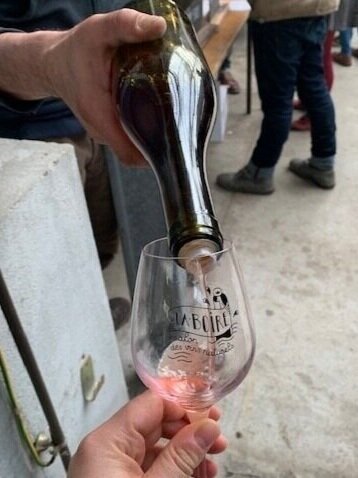
What is La Boire?
The 3rd edition of La Boire took place on Saturday 7 and Sunday 8 December 2019 in Nantes. A natural wine fair, organized by Pinards and Jus d'Ancenis with 18 winemakers from all over France.
This is where we’ve spent our Sunday: tasting promising new cuvées and meeting some familiar faces…
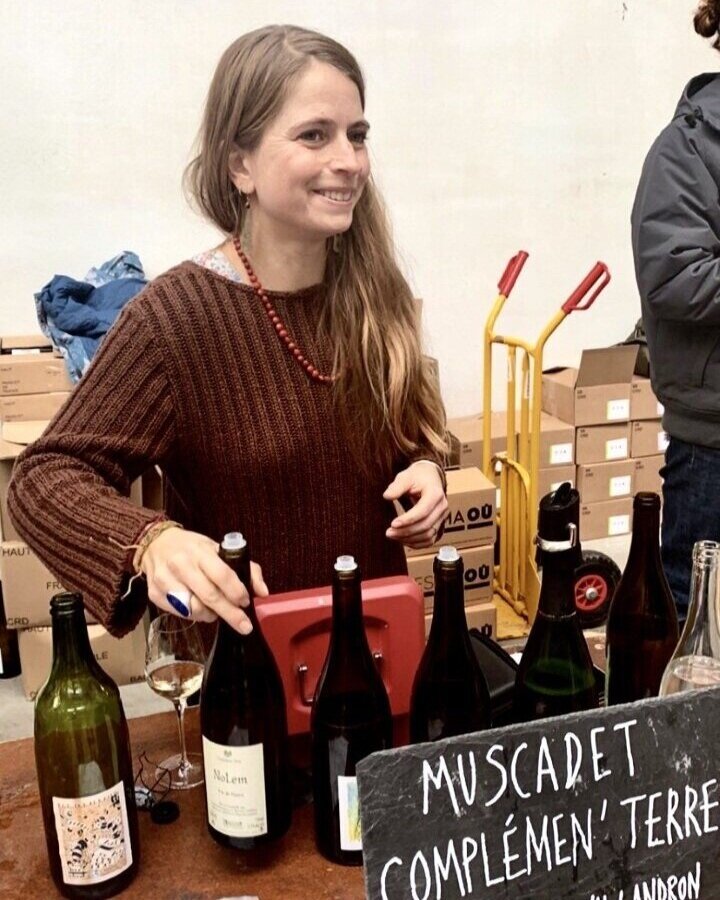
Complémen'terre
Le Pallet, Loire-Atlantique, France
Both Marion and Manu were born in Muscadet and have been around vineyards their whole lives. After a long time away working for winemakers in New Zealand (Felton Road Winery) and Chile (Domaine Clos Ouvert), they settled in 2013 in the village of le Pallet and work now with three grape varieties: Melon de Bourgogne (8 ha), Folle Blanche (0,68 ha) at la Haye-Fouassière, and Gamay (0,60 ha). The wines are all vinified by parcel with the aim of showing off the varied volcanic terroir of the region.
What’s new: 2018 Potion Mama | Pet Nat
Manu: “ ‘Potion Mama’ was originally meant to be called ‘Potion Magique’, but this name is already in use within the beverage industry. So ‘Mama’ comes from our names: MAnu and MArion. In addition it also refers to Mother Earth.”
Folle Blanche (20%) and Melon de Bourgogne (80%) grown on othogneiss and silt. Aged for 14 months.
2018 has been a hot vintage and the end result is a dry and aromatic pet nat.

Rémi Sédès
Coteaux d’Ancenis, Nantes, France
Hailing from the Jura, Rémi studied agronomy when he arrived in the area to live with his Nantes-born wife. He worked for a couple of years with Vincent Caillé, and then spent time honing his red winemaking skills in Bordeaux before setting up on his own in 2013.
What’s new: 2018 Samplemousse | Rosé
Hand harvested Gamay, cold macerated for 4 hours and then fermented in cellar in fibreglass for 2 - 3 weeks. On lees until bottling.
Why ‘Samplemousse’? In France you’ve got a drink called Pamplemousse Rosé which has a slightly sweet, easygoing grapefruit taste that is more approachable for entry level wine drinkers.
Remi always found that the wine from his granite parcel reminded him of grapefruit, so ‘Samplemousse’ is his own, naturally farmed version, of the French Pamplemousse Rosé.

Les Terres Bleues
France, Loire-Atlantique, La Chapelle-Glain
Xavière Hardy is a tough, determined woman who makes amazing juice while leaving as little mark on the land as possible. Enlisting the help of Ancenis grower Jacque Caroger, she lobbied the local council, who eventually relented and gave her permission to plant her vineyard. After analysing the terroir she chose Pinot Noir, Pinot Gris and Grolleau.
What’s new: 2018 Blanc Noir | Red
100% Black Grolleau, grown on blueschist. Direct press then fermented for 8 days in vats with and matured in barrels for 8 months. No added sulfur. The "Blanc de Noir" cuvée has produced a dry white wine, with a beautiful freshness and vivacity.
Xaviere: “I tried by chance the "Blanc de Noir", with a Munster and I really liked it because this wine came to "counterbalance" and "refresh" the Munster cheese which has a strong personality. Overall, it's typically the little white one to enjoy in the late morning, with oysters on the go!”
A Chat with La Roche Buissiere

La Roche Buissiere
Vaison-la-Romaine, Southern Rhône, France
After deciding that studying city water waste management wasn’t for him, Antoine took over from his dad Pierre in 1998. Shortly joined by his wife Laurence, they began vinifying and bottling their own wine.
Organic since the 1970’s Pierre had used to sell his grapes to the local co-op.
Vineyards are planted with Grenache and Syrah. Very intense vineyard work allows for early harvest, resulting in less-concentrated and lower-alcohol wines.
They hand-harvest, don’t use synthetic yeasts, and don’t fine or filter.
How did the 2019 harvest treat you?
Compared to last year, this year has been great. In 2018 we've had lots of rain in spring and lost half of the harvest. This year went well, even though we didn't see a drop of rain for 4 months and had record temperatures of 43 degrees. We have started early (September 23-26) and we did it very fast, because of the heat. All grapes were harvested by hand, as usual.
What is special about the Côtes du Rhône region?
We are in the south of the Côtes du Rhône, in an area called the 'Region les Barronies'. The higher altitude (300-350m) means we get more freshness up here when summers get hot. Because of this, compared to other wines of the southern Côtes du Rhône area, ours end up being more fresh and crisp.
Also, in this region we have a big presence of polyculture. Loads of fruit and olive trees which is great for the soil.
What effect does the clay and limestone soil have on your wines?
These are rich soils which offer a lot of freshness. Two years ago we have started using natural compost as a fertiliser to avoid any sort of intervention. We plant wildflowers in between the vines and once they grow we cut the leaves which form the compost. We then let nature do its work.
Why are you using concrete tanks?
For us, it's a material which makes temperature regulation easy. It stays the same be it summer or winter as it withholds external temperature changes. We use them both for winemaking and also for storage.
What are the biggest changes you've seen in winemaking since you got started?
Clearly, the natural wine movement which is now more stronger than ever. Our domaine has been organically converted since 1976 by Antoine's father, but we have then gone further and started working naturally not only in the vineyard but also in the cave.
All the work we do in the vineyard is to allow the vines to have a natural equilibrium. This is then clearly reflected in the quality of the grapes.
The idea is to be as close as possible to the earth and take what it has to give without any intervention.
Do you think now there are more makers who are converting to bio?
Yes definitely. Near us there are plenty of winemakers who are converting. But then also not everyone is ready to make the change.
I have also more customers who come to the shop and want to find wines with as little sulfur as possible, because they can tell the negative effect sulfur has on their bodies, such as headaches and stomach ache. Or, they are allergic to sulfur. And I find that this sort of customer base is growing. That's good because mentalities are changing and people are asking themselves more often now about what exactly it is they are eating and drinking.
It's essential for us to work with people like you because you can relay our philosophy back to your customers and contribute to the change.
Which wine fairs will we be able to see you at in the coming few months?
Definitely La Dive Bouteille on the 2 & 3 of February 2020 in Angers. That is THE wine fair for us. Just before that will also be at Les Affranchis in Montpellier on the 26 & 27 of January 2020. That's it for us when it comes to big wine fairs.
What I have started doing more of are trips to see clients around France, or smaller events organised by different people we work with.
What can you tell us about your future plans?
We would like to plant more vines in 2020, especially the ones which offer freshness like Cinsault or Mourvèdre.
Wines now in stock
Red
2017 (VDF) Petit Jo – Grenache, Syrah
Hand harvested, 100% de-stemmed. Short maceration to retain freshness. Fermentation with indigenous yeasts in concrete tanks. No added sulfur.
2017 (Côtes du Rhône) Premices - Grenache, Syrah
Hand harvested, 100% de-stemmed. 8 day fermentation with indigenous yeasts in concrete tanks. Pumping over and racking after fermentation. No filtration or added sulfur.
2015 (Côtes du Rhône) Le Claux - Grenache, Syrah
Hand harvested, 100% de-stemmed. 20 day fermentation with indigenous yeasts in concrete tanks. Pumping over and racking after fermentation. No added sulfur.
2017 (Côtes du Rhône) Flonflons - Grenache, Syrah
Hand harvested, 100% de-stemmed. 12-day fermentation with indigenous yeasts in concrete tanks. No added sulfur.
For any wholesale and stock enquiries, please contact hello@winesutb.com
A Chat with Vignereuse

Vignereuse
France, Gaillac, Andillac
Marine Leys works with a mix of local varieties: Mauzac, Loin de l’Oeil, Braucol, Duras and then some Gamay (fashionable in the 1970’s for Primeur wines), and Syrah (the most commercial of the varieties, and Gaillac used to sell a lot of bulk must and juice to other regions).
The vineyards are situated on the south-east-facing slopes of the Cordais plateau. The soil is schist on limestone – less argilo-calcareous than the rest of Gaillac. All wines are fermented and aged in fibreglass. No sulphur is used on the reds.
How did this year's harvest go for you?
It was a very good one. We were lucky to have had rain at the right time. The maturity progress was never interrupted and the alcohol levels aren't too high either. I would say we've had the perfect result.
That's great! A lot of other winemakers we spoke with have suffered from the big heatwave this summer
I know, we are really lucky here in Gaillac. We have enough water but not too much. Haven't had any frost this year either. Last month we've already had 100mm of rain, which is already building a reserve in water supply for next year.
What is special about Gaillac?
Gaillac is one of the oldest vineyards in France, established in Roman times or even earlier, with great soil and terroir. Roman merchants transported wine to Bordeaux and Northern Europe down the Tarn.
Gaillac is quite isolated. It's close to Toulouse, but Toulouse never wanted to drink wines from Gaillac.
Gaillac has always been underestimated. It's not as famous as Burgundy or Loire regions. And I find that as a result of that Gaillac's winemakers underestimate themselves today, even though there is a big potential here for great wines. Today there are around 20 winemakers in Gaillac doing natural wines.
And how did you find you way to Gaillac?
I learned winemaking in Turkey when I followed a friend of mine who was establishing himself as a farmer there. His daughter wanted to get into winemaking so he planted a whole vineyard with vines imported from Italy next to his farm just for her. I then decided to help them and fell in love with the vineyard in Turkey.
When I came back to France it was mainly for my own education, as it was rather complicated to do in Turkey. I wanted to work with someone who knew how to make natural wines. In the vineyard in Turkey I was working organically, so I knew that this was the direction I wanted to head in. But they have never let me experiment with making my own wines, so when back in France I didn't want to start without learning about it first; how to work with natural yeasts for example. So I have gotten in touch with the Plageoles family and they said yes. I've spent two years at their domaine in total and have then found a vineyard of my own in 2014 not too far away. I have always worked organically but am organic certified since 2018.
What about your family? Do you have any winemaking background?
No, not at all. We have a chef but no winemakers!
Do you work alone?
I get people to help with the harvest and I've been employing a worker called Sebastien for two years, mainly for pruning. We have also done a cuvée which he is in sole charge of. But besides that I do everything myself. I'm really excited to have done this year's primeur under the new appelation 'Vin Nature' which is now on a testrun in France for the next three years! This will be really big.

How do the other winemakers in Gaillac influence you?
We've got a great community of winemakers, called Terres de Gaillac. There are about 20 of us and we see each other pretty often. Once a year we take a road trip together to visit other winemakers and get inspired. Last year we've done Beaujolais, this year it will be the Rhône. We exchange a lot of tips and see how we can improve things - and just help each other out generally.
Which wines do you enjoy drinking?
Le Clos de Grillons from the Rhône, we are going to visit him so I'm really excited.
Which wine fairs will we be able to find you at in the coming few months?
I'll be at Roots 66 on the 27 & 28 of January 2019 in Montpellier and at La Dive Bouteille on the 2 & 3 of February in Angers. That's all I have planned at the moment.
What can you tell us about your future plans?
I'd love to work with animals, but I'm not sure how soon I'll be able to do this. And also this year for the first time I'll be making a 'Vin de Voile', which has to be kept in a barrel for 7 years. So I'm pretty excited to see how that will turn out.
Wines now in stock
Red
2018 (VDF) Gaia Quoi! – Syrah
A saignee of around two days. Is this Gaillac's answer to Lambrusco? Hand-harvested and unfiltered Syrah pet-nat.
2017 (AOC Gaillac) Croizade - Syrah, Duras
Hand-harvested Syrah (40-year-old vines) and Duras (10-year-old vines) blend. Unfiltered and unfined.
2016 (AOC Gaillac) A la Santé des Mécréants - Duras
Hand-harvested Duras from 40 year old vines. Eight-day maceration with regular pumping over. Aged in fibreglass tanks.
2016 (AOC Gaillac) L'Ancêtre - Braucol
Hand-harvested Braucol from 15-year-old vines.
For any wholesale and stock enquiries, please contact hello@winesutb.com
A Chat with Ferme de Sept Lunes

Jean Delobre
France, St Joseph, Bogy
Le Ferme des Sept Lunes is a 10-hectare farm perched on one of the highest areas of St Joseph. Visiting involves a tortuous 350m road-climb from the valley floor. The hair-pins are not for the faint-hearted.
The latest of three generations on the same farm, Jean converted to organic and biodynamic agriculture in 1997 and only uses sulphur in his wines when it's absolutely unavoidable. The vineyards in the upper part of St.Joseph have a south-eastern exposure, the altitude bringing freshness to the wines. The climate has been tending to Mediterranean in recent year, with wind coming from the north.
Each cuvée is site-specific; with Syrah, Roussane, Marsanne, Viognier and a bit of Gamay planted mostly on granite soils.
The wines all show great freshness and purity, the whites all have texture and tension, the reds with depth, aromatics and a fantastic juiciness.
Tell us about the new wines we have just received: 2015 Lunatik Ladyland and the 2018 Syrah Gamay
Lunatik Ladyland used to be AOC St Joseph but then it was declassified to Vin de France as it was too oxidised. You used to have the 2012 version. 2015 compared to 2012 is richer and less oxidised.
We chose to declassify the wine as we thought that when people order a classic St Joseph they will expect something entirely different. So it was better to change the name and appelation so we don't mislead our customers.It's a Roussanne Marsanne blend harvest at good maturity and aged one year in barrels then in stainless steel for another year. We then left it on the side for the wine to stabilise further.
The 2018 Syrah Gamay cuvée is an exception as usually it's only a Syrah. But that year the summer was hot so the Syrah was quite concentrated and lacking it's usual freshness. So I have then added 25% of juicy Gamay to make it more balanced. 7 days maceration, kept in fibreglass tanks.
How did the 2019 harvest go for you?
It was a hot year but in the end we had a good harvest which should give us great wines. We were very careful about choosing the harvest date, so the maturity doesn't go too far. But it was a hot year and the vines suffered.
Would you say that there was a noticeable change when it comes to temperature in the recent years?
Yes, the last three summers were very hot. Before that we've had years with fast maturity in 2003 and 2005, but it's true that the recent years are noticeably hotter.
What are your personal favourite vintages you have made to date and why?
The first one I have ever made: 2001. Beginner's luck! Then, I also like 2009 and I believe that 2017 has great potential.
Which wine fairs will we be able to see you at in the coming few months?
This weekend (23 & 24 Nov) I will be at Salon des Doubouchées in Lyon, which is a local wine fair. On the 26 & 27 of January I'll be at Les Affranchis in Montpellier and 1 & 2 of February at Salon Degustation Grenier St Jean in Angers. Next April I'll also be at Vini Circus, which sees a big mix of public as well as trade visitors.
What can you tell us about your future plans?
We would like to plant some trees and bushes in and around the vineyard. This is to protect the vines from the strong winds we are having in this area, as well as offer some shade during hot summers which are becoming more frequent now.
Wines now in stock
White
NEW 2015 (VDF) Lunatik Ladyland – Roussanne Marsanne
Red
NEW 2018 (VDF) Syrah Gamay – Syrah, Gamay
2015 (AOC Saint Joseph) Premier Quartier – Syrah
For any wholesale and stock enquiries, please contact hello@winesutb.com
Save the Date: 10th November 2019 - Stockport SK1 1JY

WTLGI Wine Fair
We are excited to announce that we will be part of the wine fair at Where The Light Gets In in Stockport. The fair will take place on Sunday 10 of November 2019, open to general public and trade between 11am and 5pm.
Participating: Tutto wines, Wines Under the Bonnet, Otros Vinos, Newcomers wines, Kiffe my wines, Modal wines including guest wine makers.
Tickets are £20 and will include a glass and the opportunity to meet people we value grandly, the importers and the makers and taste the very best wine available in the UK. It will be possible to purchase food as well during the fair, cheese from the Courtyard dairy, pies from Littlewoods butcher and salads from Isca.
Tickets are now available prior to the general release for friends and fellow industry people - we would like you to be there!
"Once again we are celebrating the people behind what we do and we are inviting 6 importers that we have been working closely with in the past 3 years. They are all engaging fully in a system that we believe in and work with winemakers that produced wines with precision and responsibility, culminating in a balance that both nourishes the body and sustains our eco-system. We pick from our own continent, harnessing the knowledge, ethical practice and exacting standards of these winemakers.
"We were at the forefront of bringing most of these importers and their wines in this part of the country. And we are now getting all of them under our roof to share and celebrate what they do, and the relationships we created through the years. It is a celebration and chance for everyone to meet, drink and share stories."
- Caroline Dubois, Sommelier
See you there!
Save the Date: 17th November 2019 - Exeter EX1 2JB

A Chat with Fergus Clague

Fergus Clague
France, Languedoc, Junas
Born and bred in South London, Fergus and his wife Vicky ran Hand Made Food in Blackheath for 21 years. In 2014, blown by a wind of change, Fergus and family arrived in the south of France.
The wine story started when Fergus met Thierry Forestier, Laurent Bagnol, Yves & Vincent Moulin and Olivier Pichon at Quilles de Joie, a natural wine festival in Souvignargues (Gard), France. None of them were represented in London so he took a suitcase full of their wines and did tastings all over London with several importers. And it all went from there...
In 2015 they lived on a domain outside of Montpellier as negociants and in return for that they got to make a small amount of their first vintage, ‘Press in the Vines’, a soft and easy drinking Cinsault.
In 2017 they produced 900 bottles of 'Gout Elles', a blend of Grenache and Carignan. The name means 'grappions' - the little bunches on the top of the vines which people usually leave behind during harvest. At that point in time they still didn’t have their our own vines, so Thierry Forestier kindly let them pick the grapes he had left from his vineyard.
Then in 2018, they had the very first harvest on their very own parcel two miles away from their cave. They produced ‘Echappez’ and we now have it - right here - right now...
Tell us about the 2018 Echappez we have just received
I now rent a parcel of Grenache, it is 0.3ha on limestone on a lovely slope. The vines are about 80 years old. Last year was our first harvest and it was fantastic, we've had a really lovely crop. We had two tons of lovely grapes and produced a total of 1200 bottles.
What is the meaning behind the name?
Echappez is the imperative of 'escape'. It basically means 'get out of here'. For us it was partly about escaping from London.
How are you enjoying your life in France?
It's cool, we like it. We've got two teenage boys and they are both pretty happy.
How did the 2019 harvest go so far?
This year in July we've had over 46 degrees for a couple of days. I am a complete beginner when it comes to winemaking and had treated the grapes a couple of days before. They got burned really badly, I was devastated. But there were loads of people in the same boat as me. The heat was terrible and as a result the sugar concentration was quite high, so the issue was the yeast converting all of it.
In total we've harvested one ton, with a really high sugar concentration. So what we did was we went and we picked some Grenache that was lower in sugar at the domaine Mas de la Font Ronde nearby. So this year we've got two cuvees: one which is made from our own super ripe Grenache, and the other one of the less ripe Grenache from the other vineyard. They are both interesting and hopefully by next spring I can put them together, that's the idea.
Which wines do you enjoy drinking besides your own?
'Aramonix' from Thierry Forestier is pretty much 'THE reference' for me.
So, is Thierry a really good friend of yours?
Yes, it wouldn't have been possible without him. He has helped us a great deal and whenever I have a problem, Thierry is the first person I ring. He has been very generous. I do try and make up for it with my cooking skills. For example, this year we will be doing the cooking at theQuilles de Joiefestival for the 4th year in a row. That is just such a lovely event and as we don't get paid for it, that is my opportunity to make up for all the favours that everyone has done for me. Normally there are a couple of chefs who come out from the UK, too. It's a great opportunity for them to understand how to drink all day but then still put in a good evening's work!
What can you tell us about your future plans?
We've got a couple of nice two-year-old barrels coming from Bourgogne. This year we are going to do some barrel aging, partly because there is still some sugar left in the Grenache we've harvested this year. That really needs to be left in a barrel over the winter in order for it to finish.

Now in stock
Red
NEW 2018 Echappez - Grenache
"10 days of maceration carbonique, manually pressed in basket press - that’s why it has a really bright colour as it was lightly extracted. Aged in inox. We bottled it in May this year. It is a wine which has a potential to develop over time."
We can't wait to see where Ferg's journey takes him!
For any wholesale and stock enquiries, please contact hello@winesutb.com
Another Trade Tasting

Join us for our Autumn Wine Tasting on Monday, October 14, which is very kindly being hosted by the team at Berber & Q grill in Haggerston.
We'll be showing new arrivals alongside our good friends Otros Vinos and Wright's Wines. This time we will also be welcoming brand new importer Beattie & Roberts.
No RSVP necessary, just pop in if you work in the trade.
See you there!
A Chat with Xaviere Hardy

Les Terres Bleues
France, Loire-Atlantique, La Chapelle-Glain
Xavière Hardy is a tough, determined woman who makes amazing juice while leaving as little mark on the land as possible.
She hasn’t taken an easy path. There were no vines for miles around her village - La Chapelle-Glain, about 60km north of Nantes. In fact, planting vines there was officially forbidden. That wasn't about to stop Xavière, who refused to be deterred from her dream of a career change after 20 years running her own business
Enlisting the help of Ancenis grower Jacque Caroger, she lobbied the local council, who eventually relented and gave her permission to plant her vineyard. After analysing the terroir she chose Pinot Noir, Pinot Gris and Grolleau.
Les Terres Bleues is the name – reflecting the blue schist that predominates on her 1.5-hectare plot. Her plants (around 8,000 per hectare) are trained in the Albarello style, common on Mount Etna.
With help from family and friends, each vine was individually staked with a whacking great lump of wood. This type of training gives all-day exposure to the sun, very helpful in this northerly location.
Connection to the plant is paramount:
"The vines are grown organically. I work as naturally as possible, I take care of my vines according to the lunar calendar with nettle, comfrey, horsetail, oak bark, willows and many other plants. I also apply biodynamic preparations since the establishment of the vineyard in 2013 [DEMETER certification was requested and obtained in 2019]. The objective is to allow the vine to strengthen its own resistance to disease but also to improve exchanges between soil micro-organisms and its root system. I attach great importance to the vine itself but also to the ecosystem in which it is part."
How did 2018 treat you?
”2018 was an excellent year. The harvest brought great quality grapes thanks to the beautiful sunshine we've had. As every year, the harvest was manual, all the wines were vinified without any oenological inputs and without sulphur.”
What do you expect from this year's harvest [2019]?
”A good harvest quality due to the weather. Unfortunately, the spring frost and the summer drought we've had this year will have an impact on the volumes harvested, particularly for Pinot Gris and Pinot Noir. For the Grolleau the impact is less, the harvest should be beautiful and qualitative.”
What is your favorite vintage so far and why?
”I have been producing wine only since 2015, since I planted the vineyard from scratch in 2013. I really enjoyed 2015 (my first little vintages of Pinot noir and Pinot gris) and 2018 which was a great year (2016 = frost; 2017 = frost). For 2019, I start harvesting tomorrow, September 17.”
Which wines do you like to drink in addition to yours?
”The sulphur-free Gamay by Jacques and Agnès Carroget (La Paonnerie in Anetz) and the Muscadet by Stéphane Orieux (Vallet).”
What can you tell us about your plans for the future?
”Invest in a wind tower to fight frost (the order was placed for installation in spring 2020). In 2019 I also planted an additional half hectare of Pinot Gris and Pinot Noir in order to have more wine on these two varieties because I have a very small estate[1.5 ha including this young plantation].”

Now in stock
White
NEW 2018 AWA - Pinot Gris
"Direct pressing (pneumatic press), alcoholic fermentation in vats with indigenous yeasts (8-10 days) then matured in barrels for eight months. Sulphur-free."
Red
NEW 2018 Vin du Pastre - Grolleau
"From a young vine planted in 2014, which froze in 2016 and 2017 - the harvest was therefore abundant in 2018. Totally destemmed by hand with wicker destemmers that I had made by a basket maker. Vatting for 10 days (fermentation with indigenous yeasts) then maturing in barrels for 8 months. Sulphur-free."
NEW 2018 XH2 - Pinot Noir
"Maceration in vats (fermentation with indigenous yeasts - 10 days). Pressed then matured in barrels for eight months. Sulphur-free."
For any wholesale and stock enquiries, please contact hello@winesutb.com
A Chat with Jean-Pierre Rietsch

Vins d'Alsace Rietsch
France, Alsace, Mittelbergheim
The Rietsch estate has been in the family for seven generations and the land was previously used for tobacco and crops. It was Jean-Pierre’s parents who started cultivating vines in the 1970s, handing on to Jean-Pierre in 1987.
Although Jean-Pierre is now retired, he still contributes to the daily running, assisted by Pierre-Etienne Grieshaber. While another contributing company – Le Main Verte – coordinates the manual work in the vineyards, the domaine is still very much driven by a family-led culture. The vineyard is naturally cultivated, with terroir at the heart of the operation and no use of chemicals.
We've had a chat with Jean-Pierre on the 2018 Rouge and Blanc au Litre cuvées:
2018 brought us an amazing harvest. We've had a big abundance on grapes, which were really healthy and of great quality. The Rouge au Litre turned out very well and a bit more concentrated than usual. We did have our challenges in the cellar while making this wine due to volatile acidity during fermentation. I had to add 30mg/l of sulphur to help stabilise the wine.
As for the Blanc au Litre, on the contrary to the Rouge, the high yield brought less concentration as well as less acidity. It is a great wine to drink, and I can personally attest to that!
This year we will start the harvest in early September. So far it has been a complicated year as we have lost half of our grapes due to mildew as well as the heatwave this June/July. At the moment there are still a few areas affected by oidium (powdery mildew), so we need to select the unaffected grapes for harvest. In order to balance out the harvest results I will be blending some of the 2018 and 2019 vintages.
White*
NEW 2018 Blanc au Litre - Riesling, Sylvaner, Gewurztraminer
Red*
NEW 2018 Rouge au Litre - Pinot Noir
Sparkling
2015 Extra Brut - Non Dose - Auxerrois, Chardonnay
* Due to high demand we are already nearly out of stock! But don't worry, we will be getting another shipment soon. Register your interest here
New Producer Aboard: Terres de ROA

Terres de ROA
France, Auvergne-Rhône-Alpes, Monetay-sur-Allier
Loren Tisserand was introduced to us by Vincent Alexis (Château Barouillet) at the Biotop wine fair in Montpellier last January. We were quite intrigued as we were neither familiar with wines from the Saint-Pourçain region before, nor the Tressalier grape variety. We obviously liked the wines and now here we are!
The vineyard of Terres de ROA extends over 18.5 hectares spread over the communes of Monétay sur Allier (sandy soils) and Breuilly Cesset (granitic soils). It is run by Lauren and her parents Claudine and Luc Tisserand.
They work with four grape varieties: Chardonnay, Gamay and Pinot Noir, which are common in this region of the Loire Valley - and the Tressallier grape variety, which is grown only in Saint-Pourçain.
The vineyard is farmed organically in respect of the soils and the nature. Tillage or controlled grassing alternates between rows of vines in order to enrich microbiological life, promote biodiversity and aerate the soil. A fertilizing vegetable compost is also put in place. It is the only Domaine in the Saint-Pourçain AOC Appellation in Organic Agriculture certified by Ecocert in 2009.
Their philosophy: just let nature take its place.

We've had a chat with Loren Tisserand:
What have you been up to before you have joined your parents' business?
My parents created the domaine in 2006 and I joined in 2015.
Before that I lived in Paris and worked at Fauchon, a luxury grocery store. I then studied in Beaune, Burgundy, where I met my husband who has just started a new job there. I then decided to join my parents' business.
What are your responsibilities?
I work in the vineyard, cellar as well as the shop.
What do you like most/least about your job?
I like everything except the fact that I don't have enough time. It should get easier next year when we will downsize from 18 to 11 hectares, as our lease will expire.
What does the name ROA stand for?
Raisins (Grapes) – Organics – Attitude
Tell us about your 2018 harvest: What were your challenges? What went particularly well?
The year was way too hot and dry. Like for many other winemakers, during the vinification the fermentation was complicated due to a lack of energy in the juice. But, in the end, I can say we've had a great result both quality and quantity-wise.

Who creates the wine labels and what is their meaning?
My mother usually designs the labels but I have created the ones for Dans l'Absolu and Dans ma Sph'R. Both mean translated something like being in your own sphere, being whole. The label is a nod to my own childhood as I was often in a world of my own as a little girl.
Are there any new winemaking techniques or tools you'd like to experiment with?
I started to work with plants and I want to progress with this. I especially like working with nettles.
Which wines do you enjoy drinking besides your own?
I enjoy Malbec wines from Cahors, South West of France.

Now in stock
White
NEW 2018 Tresse a Lier - Tressallier
Manual harvest. 20 to 40-year-old vines. Indigenous yeasts. Vines vinified and matured independently in vats for five months and blended one month before bottling. Bottled with a small addition of sulfur.
NEW 2018 Dans l'Absolu (Cuvée A) - Tressallier (60%) – Chardonnay (40%)
Manual harvest. 15 to 50-year-old vines. Vinified and matured independently in vats for eight months and blended two months before bottling. Bottled with a small addition of sulfur.
Red
NEW 2018 Dans ma Sph'R (Cuvée R) - Gamay (80%) - Pinot Noir (20%)
Manual harvest. 20 to 40-year-old vines. Indigenous yeasts. Vines vinified and matured independently in vats for five months and blended a month before bottling. Bottled with a small addition of sulfur.
For any wholesale and stock enquiries, please contact hello@winesutb.com
A Chat With Thomas Boutin

Thomas Boutin
France, Loire, Anjou, Rochefort-sur-Loire, Angers
Thomas Boutin started his own winemaking project in 2008, with only 1.8 hectares. In 2011, he inherited a compact winery and vines from his mentor, and has progressively built up the number of hectares. He farms two hectares in Rochefort-sur-Loire and one hectare in Saint Aubin. He is evolving as a winemaker, and experiments whilst learning and finding his style.
Having studied oenology and worked in larger wineries, he is passionate to keep the approach small-scale with minimal intervention. All wines are made without any use of chemicals, are unfined and unfiltered with little use of sulfur.
Tell us about your 2018 harvest: What were your challenges? What went particularly well?
2018 has been difficult but with a good result. We've had loads of rain in June which caused mildew. It stopped in July and the heat allowed us to fight the mildew, which then resulted in a good harvest both quality and quantity wise.
What do you anticipate for the 2019 harvest?
I always wait until September to have a better idea of the end result. August is a really important month when it comes to maturity of the wines. For the moment what I can see is that the buds are developing well from the outside, but I cannot tell yet how good the quality is.
What is your personal favourite vintage you have made to date and why?
I have two: 2012 and 2016 when it comes to quality, even though the yield was very small. I haven't made loads of money but the wines turned out amazing.
Which wines do you enjoy drinking besides your own?
Normally I enjoy drinking full-bodied wines but at the moment I drink light reds. There is no particular region that I prefer, I am more about discovering new wines, especially from outside of France.
Are there any winemakers whose influence has been particularly important?
Benoît Landron has helped me out immensely. We enjoy sharing our wines and I will always be helpful to him as he has helped me to establish myself as a winemaker.
Also, there are other winemakers who have taught me a lot and who are less into natural wines but are still organic certified. For example Benjamin Delobel. There are always more things to learn as there are always new challenges coming up.
What can you tell us about your future plans?
I want to reduce the use of copper in the vineyard. Also, I want to create a new cuvée. At first I thought about using barrels but now I feel like I am at a point where I'm more connected with the earth and I want to try making a cuvée using amphora.
Further down the road I'd like to plant Pinot d'Aunis and Grolleau Gris and have some fun experimenting making new cuvées.

Now in stock
White
NEW 2017 Celsiane - Chenin
"100% chenin, from five different plots. Two plots consist of 60-70 year old vines, planted after the second world war in mass selection. The other three are between 20-30 years old in clonal selection: one with coarse grains and normal maturity, the second one with very early coarse grains, I sometimes pick it up a week ahead of the other vines, and the last with small grains and a normal maturity. The fermentation took place over one year. This wine has a fresh mouth, very ripe fruit, almost dry fruit with hints of honey. Warm notes of plum which remind of Alsatian wines and give the wine a bit of pep."
2016 Charabia - Chardonnay
"Small yield due to frost (loss of 5 - 10%) mildew (loss of 35 - 40%)and heat. The harvest went well in the end with good maturity of the grapes. It is a well-balanced wine with notes of exotic fruit and a lot of freshness. An easy drinking Chardonnay."
Red
NEW 2017 La Quilette - Gamay (60%), Cabernet Franc (35%) & Grolleau (5%)
"Small yield due to frost, but as the rest of the year has been pretty balanced we didn't get the feared mildew. Maceration and fermentations occured separately for each grape variety. I macerated for 7-8 days with whole bunches before pressing. The tanks were assembled the following spring when fermentations were complete. Harvest started already on August 23. This was the earliest I have ever had to start as the grapes were maturing very fast due to warm weather. Compared to previous vintages, the 2017 vintage has less acidity, more structure and more notes of compote red fruits, but it's still a light wine."
Sweet
2011 Topaze - Chenin
Thomas' first harvest. Hand-harvested from three vineyard selections. Direct-press with indigenous yeasts used, three years in barrel. No filtration, racked twice to remove lees before bottling.
For any wholesale and stock enquiries, please contact hello@winesutb.com
A Chat with Rémi Sédès

Rémi Sédès and our very own Basile Gueret
Rémi Sédès
Coteaux d’Ancenis, Nantes, France
Hailing from the Jura, Rémi studied agronomy when he arrived in the area to live with his Nantes-born wife. He worked for a couple of years with Vincent Caillé, and then spent time honing his red winemaking skills in Bordeaux before setting up on his own in 2013.
Part of winemaking for Rémi is a lifestyle choice; he wants to work outdoors, in the fresh air, and not with machines – his Shire horses are an important part of his winemaking process.
Rémi is a Gamay specialist, and this was a key factor in choosing to work in Ancenis – where half of production in the area is red. The soil is micro granite - which suits Gamay particularly well - with a mix of clay, sand and limon underneath.
Tell us about your 2018 harvest: What were your challenges? What went particularly well?
In June/July last year I had to put up a big fight against mildew due to loads of rain. It's better if your sprayer doesn't break, or you'll lose the fight big time! This is what I was worried about the entire time.
The harvest ended up really good as all the efforts paid off and the mildew didn't affect the buds. There was also very little harvest in 2017, so as a result the grapes in 2018 were even better.
What do you anticipate for the 2019 harvest?
This year we've had big frost in early April. Usually you get two hours of cold air mass but we've had six to seven hours. The buds look beautiful for now, so fingers crossed.
What are you drinking at the moment?
My own rosé, which is still in the tank, as I didn't have money to bottle it yet! Other than that I love a white wine from Sicily called Porta del Vento.
What can you tell us about your future plans?
Tocade my horse is expecting a foal. Also, I want to restructure two new hectares which I've acquired. They are empty at the moment I want to plant fruit trees to bring more biodiversity.
For any wholesale and stock enquiries, please contact hello@winesutb.com
A Chat with Complemen'terre
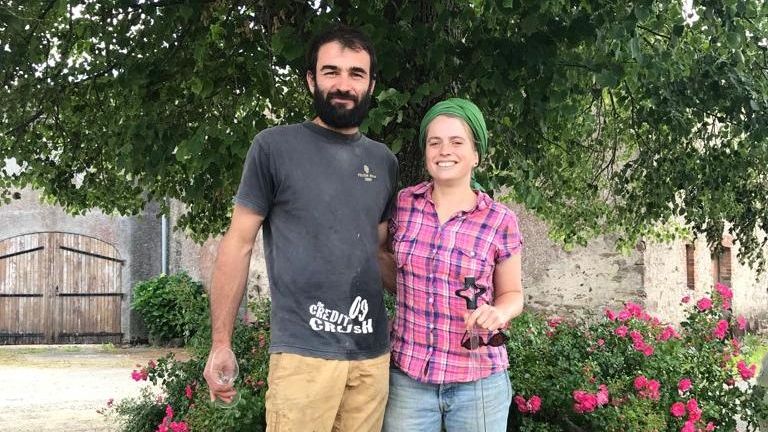
Manuel Landron and Marion Pescheux
Complemen'terre
Le Pallet, Loire-Atlantique, France
We have been following the wines of Marion Pescheux and Manuel Landron for the last couple of years. Due to a few tricky vintages they haven’t had any wine available for us until now.
Manuel Landron is the son of Jo Landron (and cousin of Benoit). His dad travels a lot to promote his wines. However, Manu wants to keep things simple and has a very hands on approach in the vineyard.
Both Marion and Manu were born in Muscadet and have been around vineyards their whole lives. After a long time away working for winemakers in New Zealand (Felton Road Winery) and Chile (Domaine Clos Ouvert), they settled in 2013 in the village of le Pallet and work now with three grape varieties: Melon de Bourgogne (8 ha), Folle Blanche (0,68 ha) at la Haye-Fouassière, and Gamay (0,60 ha). The wines are all vinified by parcel with the aim of showing off the varied volcanic terroir of the region.
Marion and Manu are working organically and in line with the lunar calendar, in total respect of the soils and the nature.
Tell us about your 2018 harvest: What were your challenges?
2018 was really hard because we had to fight a lot against mildew. But we did it: ‘Marion & Manu 1 - Mildew 0'. In the cellar however the vinification was hard. The fermentation was very slow, with not enough acidity in the juice and large yields 48 hectolitres / hectare: ‘Wine 1 - Marion and Manu 0’
What went particularly well?
We were very happy with the wine in the end! There was also a good yield compared to previous vintages.
What do you anticipate for the 2019 harvest?
A late harvest, the grapes are just starting out right now. Plus, we are moving cellar during the summer.
What are the biggest changes you've seen in winemaking since you got started?
We filter our wine less. In 2016/17 we had no filtration at all. Also, we are finding less and less acidity in the juice every year. We are questioning ourselves constantly with, for example, the harvest date. The more you wait, the sweeter the wine gets, so you need to be careful to get the acidity levels right.
What do you like most/ least about your job?
We love pruning, because it’s quiet and relaxing, you are alone in the vineyard. On the other hand we like the harvest time too, because it's social with a lot of people around and there are lots of festivities.
What can you tell us about your future plans?
We want to get more into polyculture. We now have 5 beehives and would like to get some cows and sheep, too. We are also going to plant about 50 apple and pear trees around the vines.
A Chat with Cyrille Vuillod

La Dernière Goutte
Vaux-en-Beaujolais, Beaujolais, France
Cyrille Vuillod comes from the Hautes-Alpes and, before turning to wine-making, worked in the mountains as a ski instructor. His life in wine started in 2011 working under Jean-Claude Lapalu for three years. In 2012 he produced his first vintage in his own cellar.
Tell us about your 2018 harvest: What were your challenges? What went particularly well?
It was hot but not as hot as 2017. The biggest challenge was that the heat was making the wine more alcoholic than it was meant to be. I also had to get more grapes from a friend in the North of Beaujolais.
Your wines are organically farmed without any added sulphur. Have you always worked this way?
I have used sulphur for the first three years and stopped once I had the confidence to do it. I have always worked organically but without any certification. Now I also work biodynamically.
How did you find your current vineyards? Why in Beaujolais?
I have been harvesting there for 20 years and I have loads of friends in the area.
Are there any new winemaking techniques or tools you’d like to experiment with?
For the last few years I have been experimenting with amphora and concrete eggs. I have also started making white wine. I always like try out new things. The other thing is that the climate is constantly changing and each year there is a new way on how deal with the challenges, so us winemakers help each other out to be on top of the latest techniques. The end result is always unpredictable.
Your favourite vintage to date?
2014 and 2016 were my favourite, but completely different vintages.
Now in stock
White
NEW 2018 Boire Désir - Chardonnay
In their third year of organic conversion. Chardonnay planted on clay and limestone. Vinified in 80% new barrels. Working with a cooper in Burgundy using three kinds of oak, steamed very gently to avoid a toasty flavour.
Red
NEW 2018 La Baleine Ivre - Gamay
30-year-old vines of Gamay on pink granite and sand. Eight days' maceration in fibreglass.
NEW 2017 Gamay De Bonheur - Gamay
A parcel between La Baleine and Sang neuf, on pink granite. Carbo for 20 days. Ageing in old barrels for eight months.