
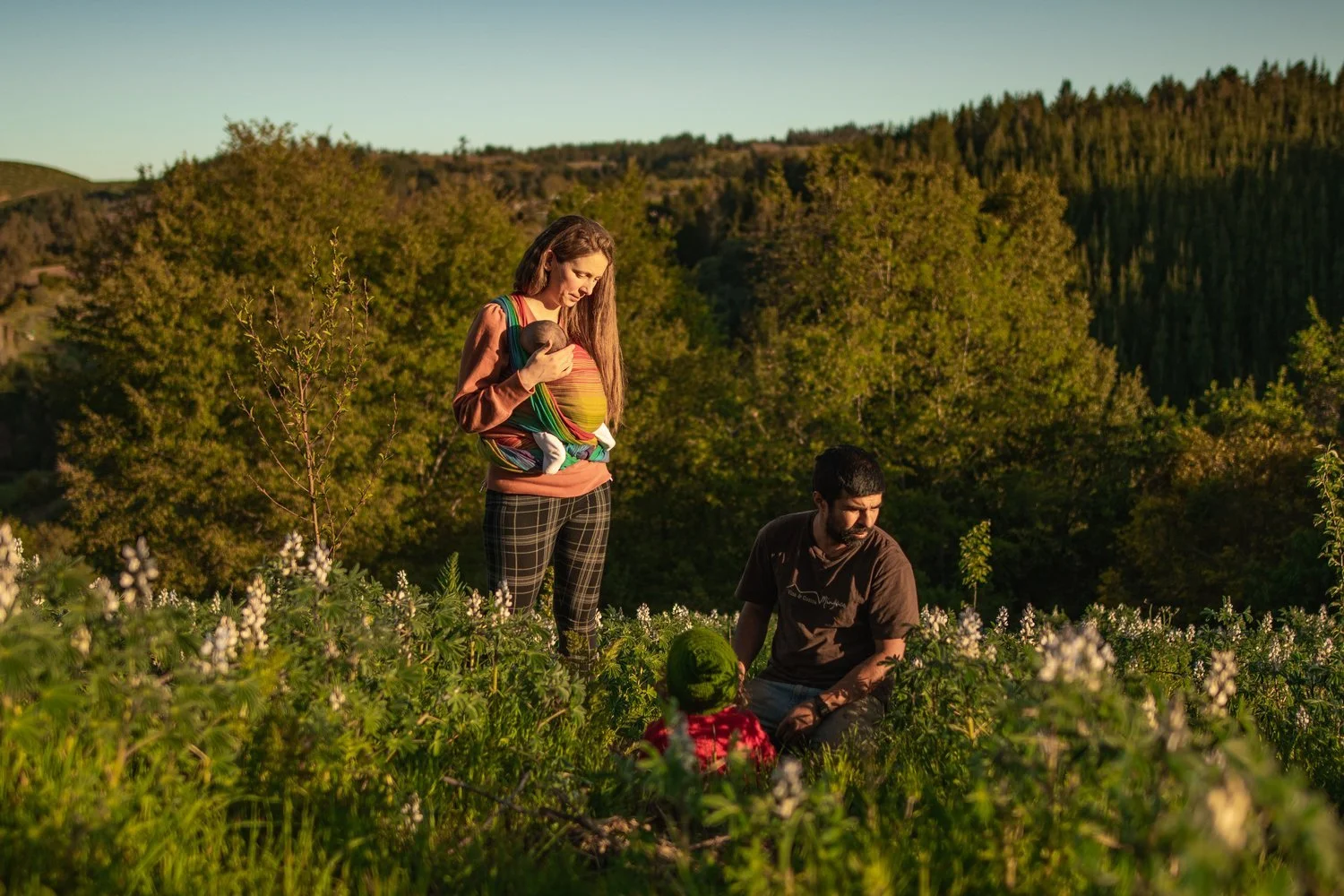
It has been three years since we last received wines from Daniela & Pablo of Vinos Mingaco in Chile’s Itata Valley, and we are incredibly happy to finally welcome them back to the UK with a trio of wines from the 2022 vintage.
The last wines we shipped arrived shortly before devastating forest fires tore through Southern Chile in 2023, burning one hectare of Daniela & Pablo’s home parcel of Moscatel (part of the 27,000 hectares of agricultural land lost across the south of the country that year.) Their home and winery were thankfully spared, but recovery has been slow and ongoing.
Rather than retreat from their farming philosophy, the experience has pushed them deeper still.
The latest arrivals are produced from the 2022 vintage before the fires passed through in 2023, but are a shining example of Daniela & Pablo's conviction and energy. The new wines are detailed below, following the conversation with Daniela on fires, recovery and amphora. We are very proud to have them back.

When we caught up with Daniela earlier this week, another nearby fire had just passed through during the 2026 harvest:
“We are in the middle of three regions that are 90% for the forest industry, an absolute monoculture for that. That is the way we humans have been, and it makes it very hard to reverse. It’s not climate change, it’s humans being humans: selfish and greedy.
“Of course, the forestry and wood industry has to exist, but they could be going for lower yields, trying different varieties, but it’s not in their paradigm, not in consideration. They will never try. The non-native pines and eucalypts are incredibly flammable, and at the density they are planted, very dangerous.”
Despite the fires, the vineyards themselves have shown remarkable resilience.
“In Itata, even the youngest vines are 35 years old and because they are not irrigated they have very deep roots. Even the youngest have roots five to eight metres deep, older ones can have roots ten or twelve metres deep or more."
“We lost about five to eight percent of the vines that never recovered, but most of them that burnt in 2023 started sprouting again in 2024, then in 2025 they produced their first fruit again- low yield but good quality. In 2026 we have smoke damage thanks to passing fires again, so we will possibly not produce any wine again this year."
“This year the vines were really healthy. The 2023 fire was bad for business, but ironically very good for the health of the vineyard.”
“Pablo already had changed from traditional Itata pruning and started doing gentle pruning in 2022, so when he started recovering the plants, the yield was always going to be lower anyway, but we can see that system starting to pay off for the vines and their energy in 2026.”
One of the hardest realities after the fires was the perception from neighbouring growers that regenerative farming itself had become the problem.
"The vineyards that burnt worst in the area were ours ones that had been in regenerative agriculture longest, with so much dry grass in the parcels. Unfortunately that gave the neighbours here a scare. There are even less people that want to work in the regenerative way now because they just see it as a problem, so now they are spraying even more glyphosate, which is so frustrating."
“But there was no way we were going back to herbicides, so there was a bit of a ‘what now’ moment in looking at farming. How do we farm in a way that aligns with what we do, but mitigates the fire risk? We realised we need more regeneration, more humidity retained, more weeds, more moisture- the only way is to push further.”
Since 2023, much of Daniela & Pablo’s work has centred around understanding the soils on a microbial level and the wider ecosystem around the vineyards.
"The first thing we did was a microbiology analysis of the soil. It showed that after the fire the ratio between fungus and bacteria wasn’t right for the vineyard- too many bacteria, not enough fungus. We need more fungus in the vineyard, the ones that digest the minerals and nutrients from the soil to the vine’s root system."
“So we started making bio-complete compost to increase the fungus in the vineyard. Now we have a lab next to the winery with a microscope for us to analyse the soil. Pablo did a course to analyse the soil properly and now we can regularly check what is working, whether the compost is the right one. We need it to be more accurate.”
Alongside the soil work, they also began mapping the landscape itself more closely.
“We also did orthofotografía- one in 2023 and one in 2026- to see how things are changing. It's like a drone photograph and it allows you to see the water, the key lines to retain humidity, and really helps with landscaping. We started creating these small ponds to retain water. We can see the difference already. The grasses in the vines used to become dry in November, now they don’t begin to dry until January. We also introduced sheep and ducks last year to have more natural manure, more happy bacterias.”
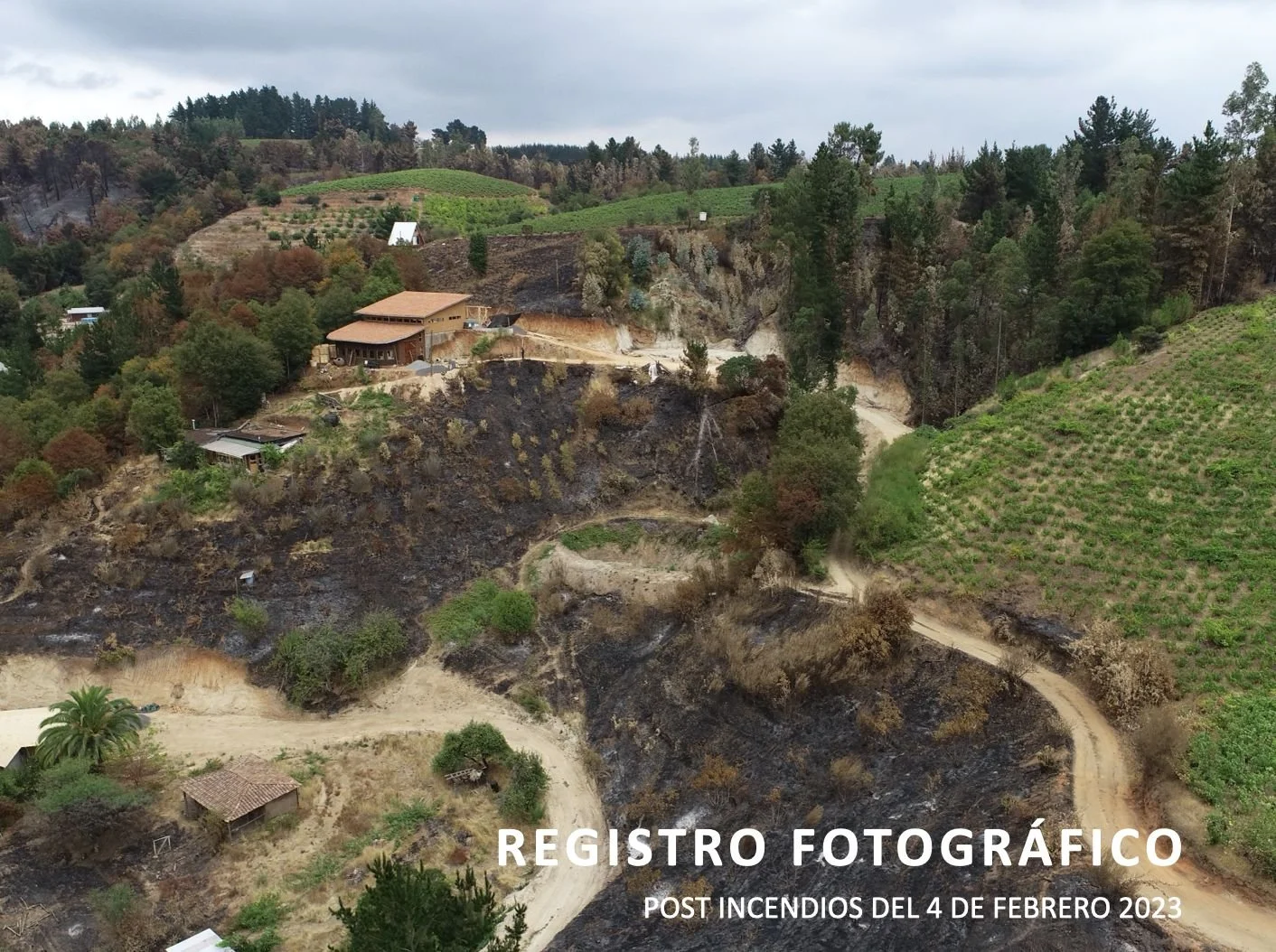
Even the surrounding native forests have shown surprising resilience.
“After the fire, the patches of native trees near the vines were totally black, and then by October afterwards they were totally green again, everything sprouted back like crazy. Unfortunately all the fruit trees like avocado died.”
Alongside the Moscatell at home, the newly arrived “Transición” wines mark the first vintage from parcels newly brought into regenerative farming by Daniela & Pablo.
“The green and orange label wines are from Pablo’s sister's parcels on adjacent slopes. Before 2022, Pablo’s brother was farming those more conventionally. It was always a tricky battle to see if he would change, but he got tired and decided to stop working the land. Pablo’s sisters live in the city- so they decided to let us take over farming, and 2022 was the first year of regeneration. The vineyards themselves sit on soils very similar to home parcels- red granitic clay with some quartz running through them. The Verde vines are forty years old, the Naranjo vines are one hundred years old.”
The third new arrival, Tinaja Moscatel, carries particular emotional weight, and we have just tiny amounts to go round.
“The 2022 Tinaja was the last wine from before the fire. That whole parcel was burnt and it is the special half of the vineyard that Pablo had worked regeneratively the longest - over ten years. When we first spoke, I remember you asking if we had ever decided to bottle that special portion of the vineyard separately to compare how the two halves of the vineyard behaved - so we were very excited to finally have a chance to do that. Sadly we don't have any more wine from there until the release of the 2025 vintage. But we are pleased with what is in the cellar."
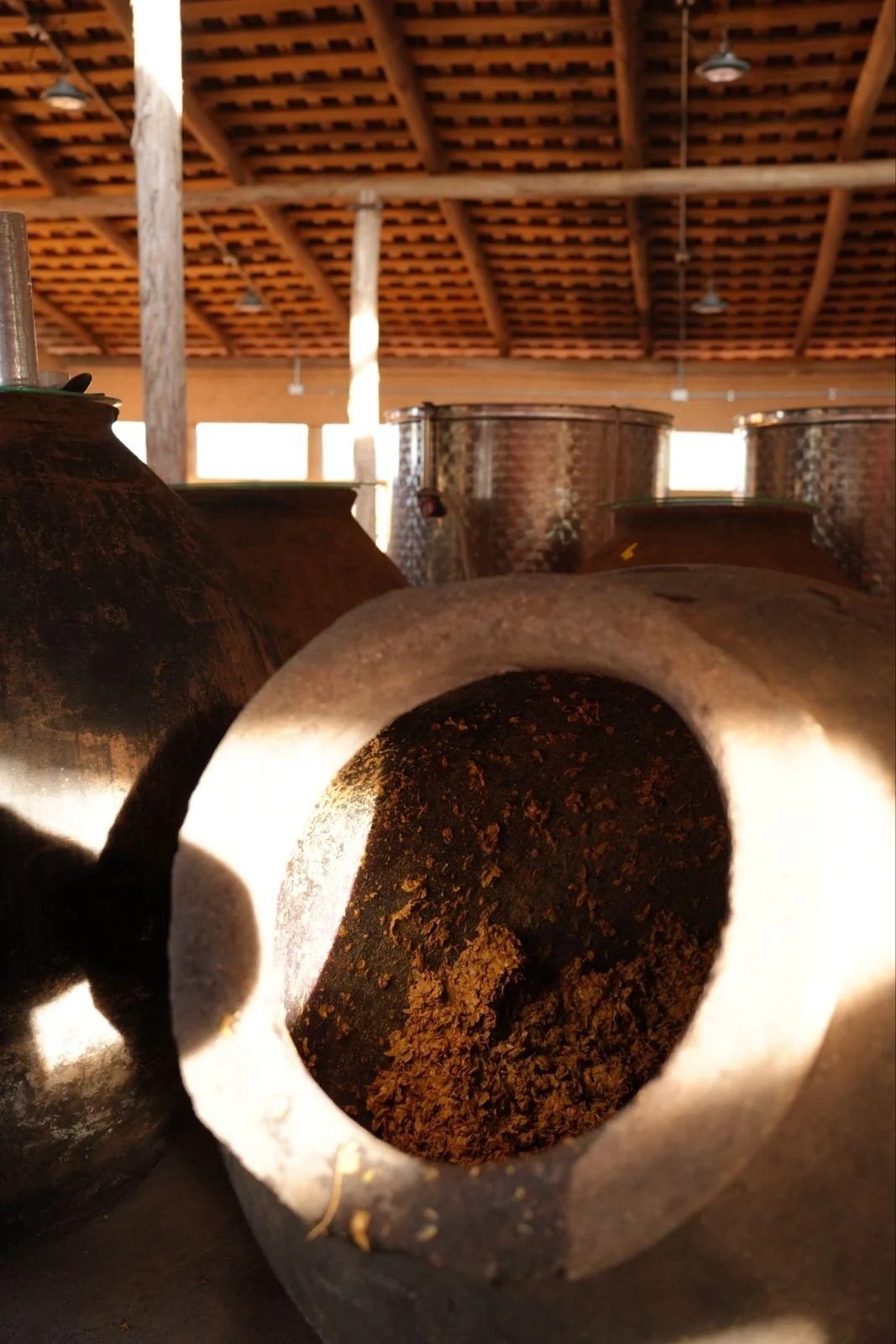
The wine is fermented and aged in traditional clay amphorae, vessels inspired by historic colonial-era winemaking traditions from nearby Maule.
"The colonial amphora comes from the Spanish tradition from two or three hundred years ago. In Maule they used amphora rather than the Itata pipa, and over time the craft was mostly lost."
“We have a lot of friends who make big ceramic pieces, but they weren’t keen when we asked them if they wanted to try making amphora. The oxygen is complex, the temperature is a lot, and they are between 200 and 500 litres - nobody had a kiln big enough. We were fortunate to find a producer making them in the traditional style from a similar makeup of clay, so he produced the first ones for us.”
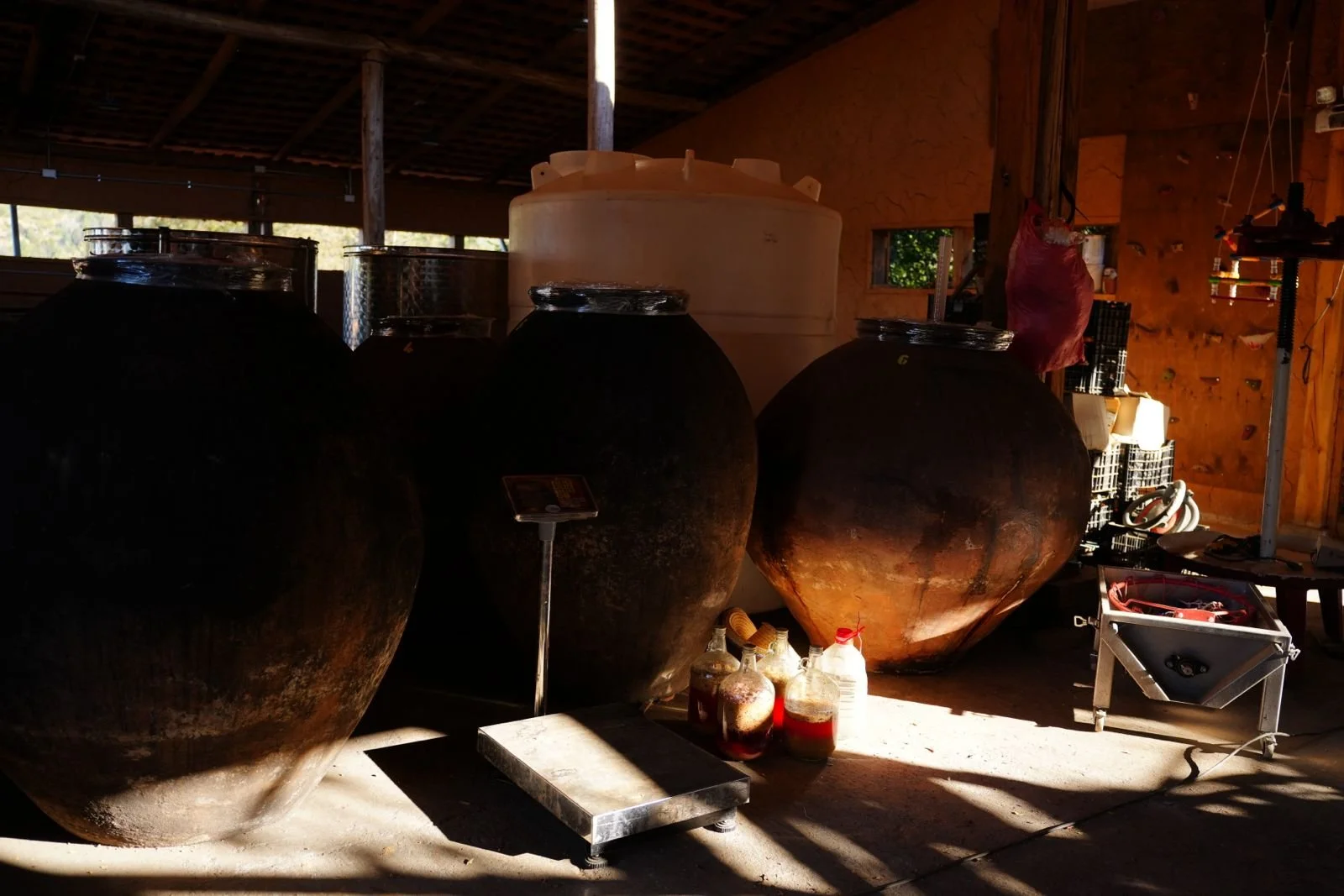
Ultimately, Daniela & Pablo hope to one day make amphorae directly from the clay of their own hillsides.
“It’s a dream to make amphora from our own clay. It’s been hard to find the artisan who has a big enough kiln, and is willing to experiment with the makeup of our clay, they like to work with clays they know - but we will find one someday!”
Winemaking itself remains deeply tied to traditional methods and the environment surrounding the vineyards. As is the historic process, grapes are macerated, regardless of white or red after being hand de-stemmed, and then fermented and aged outside during the cool Chilean Autumn and Winter - a brilliantly direct, sincere expression of Itata.
“When we began we were in a winery lower down our hills, a slightly colder space. In 2022 the wine was still made outside. Then in 2023 we moved into the new winery, but it is still open on three sides where the fermentations happen. It has always been done like that traditionally. Pablo likes that relationship with the native yeasts from the trees, that relationship.”

"We call the winery an 'earth construction' the structure is wood, the walls and roof are made from our clay mud and straw. It's beautiful, we're very lucky to have it! It has three levels, and each drops down into the next, so at the top we can harvest and ferment, the second level is where we will keep all of our ageing barrels, Pipas & Tinajas, and the third level is be where we can bottle. Everything we did by gravity already but now it is much easier."
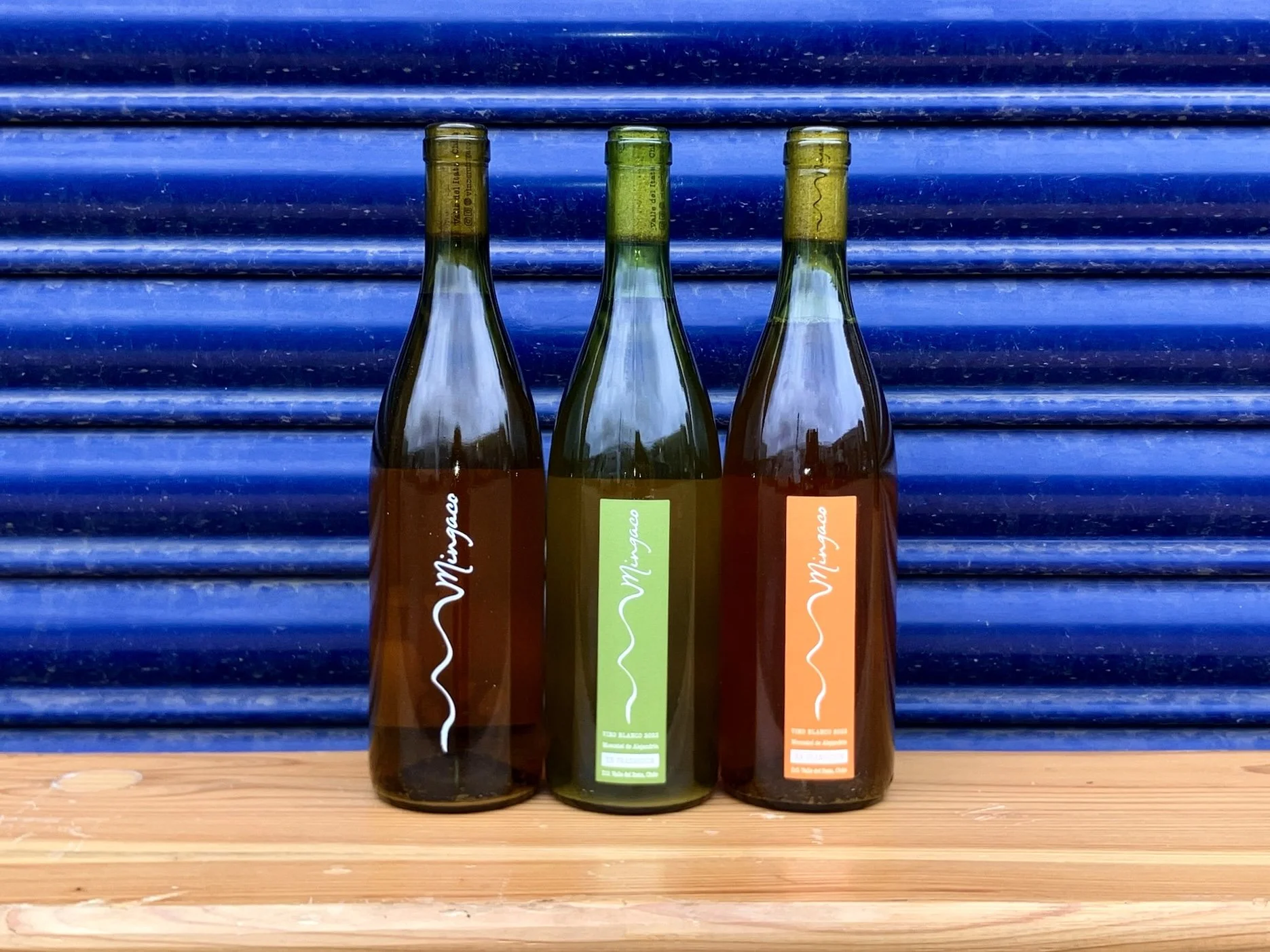
Available Now
Vinos Mingaco
NEW 2022 - Transición Verdé
Both Transición wines come from a 1ha parcel of Pablo’s family vines, 26 km from the Pacific Ocean, 200 m above sea level, south-facing slope.
Coastal dry-farming / Mediterranean. The lack of winter rains and uneven precipitation led to uneven ripening and lower yields. There were no frosts during spring and no rainfall during flowering. The summer was cool, with average maximum temperatures around 22°C.
Vines over 40 years old, own-rooted, and trained in goblet (bush vine) system. Dry-farmed, relying solely on seasonal rains and maritime influence for hydration.
Regenerative agriculture (no till) since 2022. Guided by the biodynamic calendar. Wild cover crops, legume sowing, compost teas, and biocomplete compost extracts are used, among other agroecological practices.
Hand de-stemmed, 14 days on skins in open-top wooden 'lagar' (traditional Chiléan fermetation vats) with oxygen exposure.
Free-run wine was aged 24 months in two 1,100 L closed IBC tanks, exposed to naturally low winter temperatures (0–5°C). No additions at any stage.
NEW 2022 - Transición Naranjo
From the same parcel as above with same farming, this is from the vines over 100 years old, planted on their own roots, ungrafted and head-trained.
Hand de-stemmed, with 8 months with skins in two closed 3,000L tanks. Free run juice was aged for 15 months in closed 3,000L tanks at low temperatures (0ºC to 5ºC). No additions at any stage.
NEW 2022 - Tinaja
From a 0.4ha parcel at home, vines are over 30 years old, ungrafted and head-trained. This parcel has had 12 years of regenerative no-till agriculture at time of harvest (the other 0.6ha since 2013).
The vineyards are planted on a west-facing slope 26km from the Pacific Ocean at an altitude of 200m, in a dry inland area known as Secano Interior Coelemu.
Coastal dryland/Mediterranean. A dry winter and irregular rainfall caused uneven ripening and lower yields. There were no spring frosts and no rain during flowering. The summer was cool, with average maximum temperatures of 22°C. The vines are unirrigated and rely on seasonal rainfall and the marine influence for humidity.
Hand de-stemmed with a gentle crush, the must and skins went directly into the colonial amphoras outside for four months. Juice was transferred into a stainless steel tank for another eight months with temperatures dropping to between 0ºC and 5ºC. No additions at any stage.
