
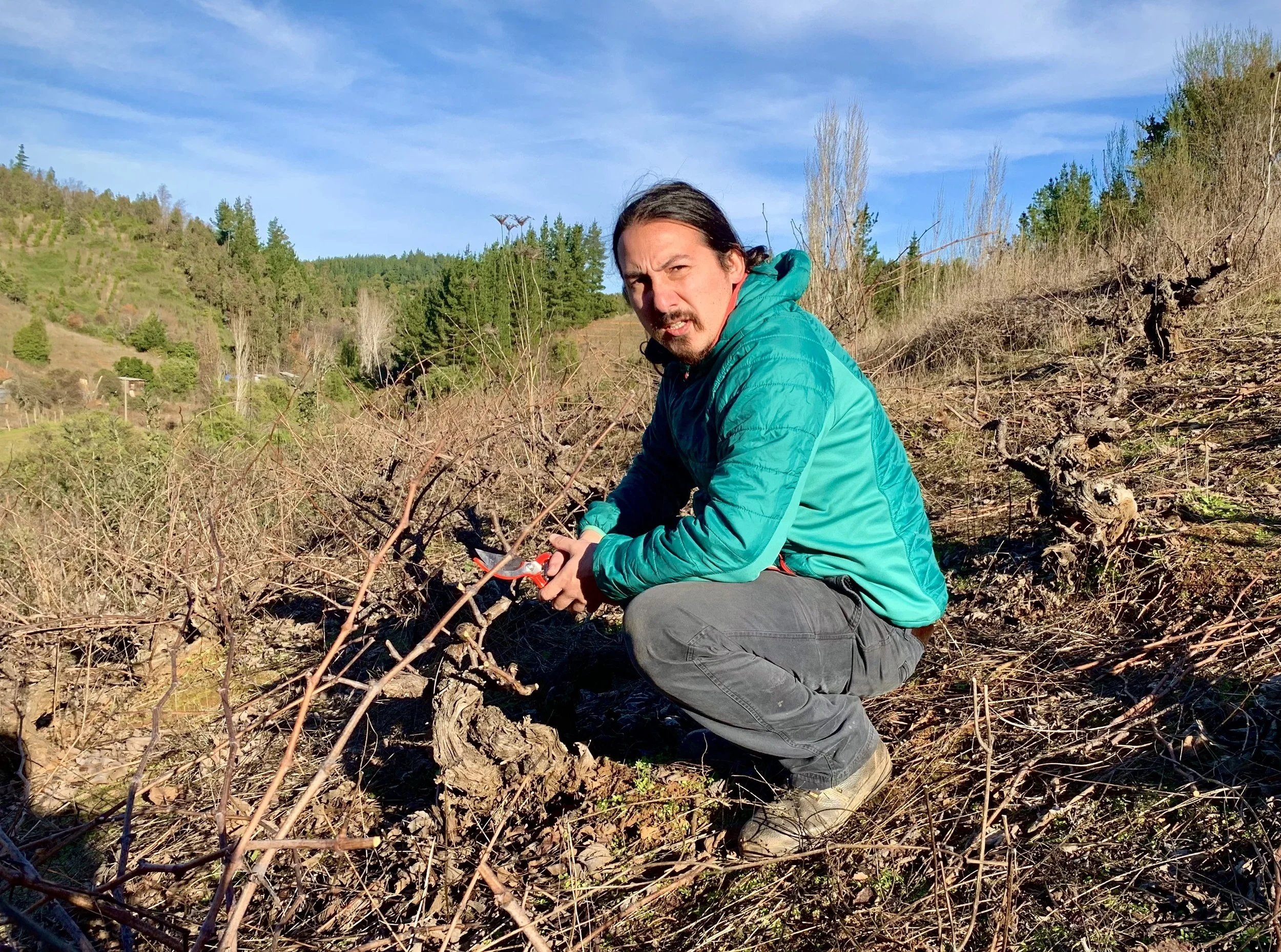
Following a little rest after their journey overseas, we are so pleased to have a set of new wines from our friend in Chile for the first time in a long while.
Direct from some of the oldest vines on earth, the wines of Roberto Henriquez are a vivid expression of a unique region: the Bio Bio & Itata valleys of southern Chile.
Working across a number of parcels, Roberto farms Pais from vines upwards of 200 years old alongside Semillon, Moscatel, Torontel and Corinto (Chasselas) from vines around 100 years old. Plots are planted on a mix of alluvial soils, volcanic black sand and granite.
He is passionate about restoring abandoned bush vines, bringing balance back to the vineyards and ensuring the plants have the fertility & energy required to produce a handful of bunches of good quality fruit rather than prioritising high yields. Processes in the cellar are in keeping with tradition, fermenting both red and white varieties on the skins, in a mix of concrete or traditional Rauli (indigenous wood) fermentation vessels. Ageing is long and slow, in older barrels, aiming for delicate wines with the complexity of their unique terroir intact.
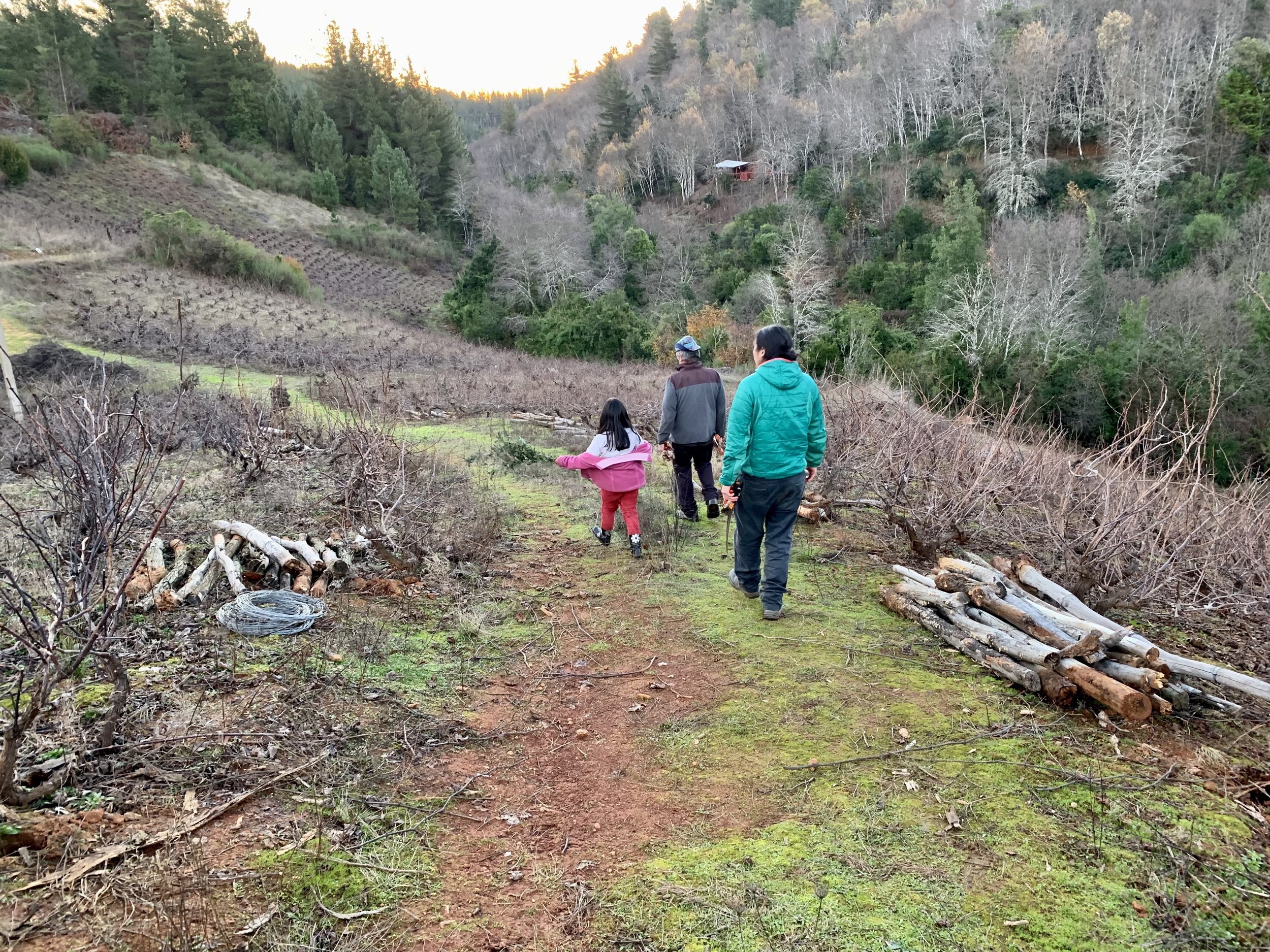
Roberto hopes his winemaking practice is having a positive impact on the face of southern Chile, even beyond his zero-input agriculture. Rescuing ancient vineyards that would otherwise be torn up for reforestation with non-native pines, he is plot-by-plot doing his bit to protect carbon-dense indigenous forests and biodiversity.
Bringing these mostly abandoned bush vines back into recovery is a long game. Pruning heavily to take the wild growth back almost to the trunk, Roberto will then try to keep yields as low as possible as new growth begins. Often as low as 5 buds maximum per plant, which is in stark contrast to the way viticulture has moved in Chile: the higher the yield, the better the grower.
Roberto is more interested in bringing balance back to the vineyards, not pushing these plants too far, rather ensuring they have the fertility & energy required to produce just a handful of bunches of good quality fruit.
Wine is taxed high in Chile, which rules out most growers bottling their own production. The economics of selling the fruit on don't make a huge amount of sense either: a big company might pay up to 20 cents per kilo of fruit, which means a grower with 1 hectare yielding 5000kg of grapes is only able to recoup $1000. That's barely breaking even.
To further complicate things, under Pinochet the Chilean government introduced a policy in 1974 to subsidise 75% of reforestation costs, with ongoing support for plantation management of pines and eucalyptus. It's been a misguided scheme that's done considerably more harm ecologically than good, and continues still.
Keeping the historic winemaking tradition alive is an uphill battle against questionable government policies and cultural shifts, but for Roberto the battle is more than worthwhile.
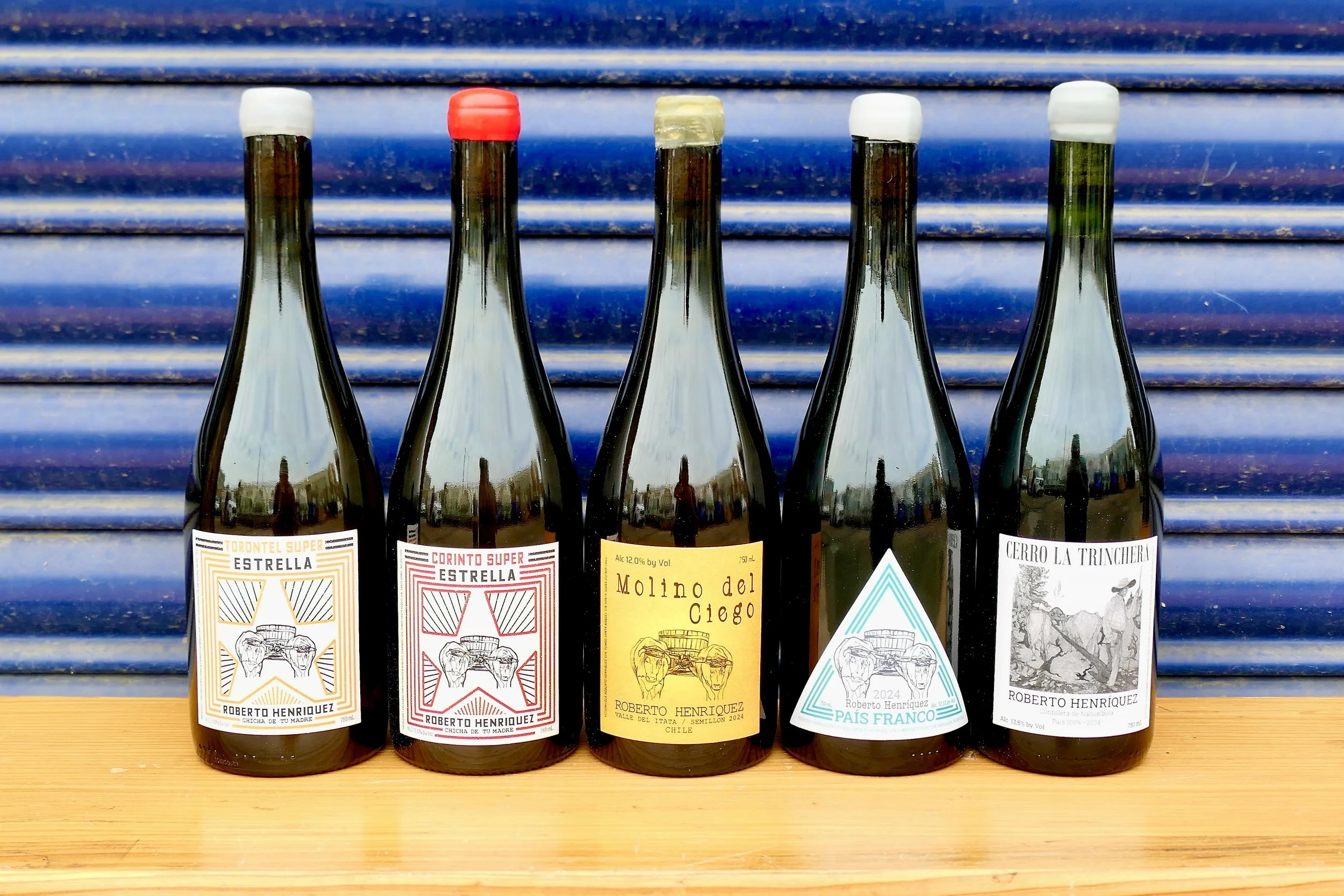
AVAILABLE NOW
2024 was the coolest vintage for Roberto in the last 10 years, yielding fresh and pure wines.
WHITE/SKINS
NEW - 2024 Torontel Super Estrella - Torontel
From 100 year old parcels in Itata on red clay with granite, quartz and iron. Macerated on the skins for twelve days in concrete tanks and Rauli fermenters. Free run juice and press juice was aged separately into two old 500L barrels for 22 months on the lees. Torontel is a native crossing of Pais & Muscat Alexandria.
NEW - 2024 Corinto Super Estrella - Chasselas
The first parcels to ripen (in mid February) Roberto's Corinto (Chasselas) vines are 100 years old. From Coelemu, Itata on red clay with granite, quartz and iron. Macerated on the skins for eight days in concrete tanks and stainless steel. Free-run juice and press juice was aged separately in old French barrels for 22 months on the lees.
NEW - 2024 Molino del Ciego - Semillon
Coastal Semillon around 100 years old, with a longer maceration of four to five weeks, with a few punchdowns to extract a little more colour and structure. Fermentation in concrete and Rauli barrels, before free-run and press juices are aged in old French barrels for 22 months.
RED
NEW - 2024 Pais Franco - Pais
From 200-year-old vines in Bio Bio, grown in black volcanic sand, thanks to ash carried down from Andes volcanoes by the river ten thousand years ago. Maceration and fermentation with the skins for two weeks. Fermentation in concrete and Rauli. Ahed in concrete for 18 months.
NEW - 2024 Cerro La Trinchera - Pais
From Roberto's southernmost and highest vineyard in Bio Bio. Vines are 200 years old and at 500m elevation. This particular location is rich with biodiversity, abundant with plants, herbs and animals. A very low yielding parcel, with just 1000 bottles made in 2024. Maceration and fermentation with the skins for two to three weeks in Rauli and concrete, aged in old French barrels for 22 months.